New York City positioning itself as a leader in AI safety regulation through municipal ordinances
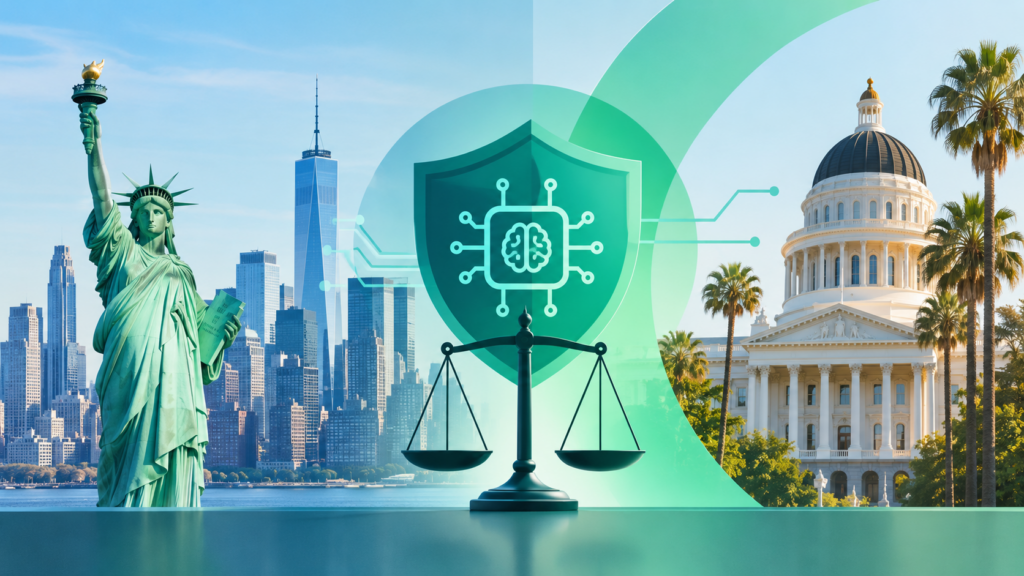
The Wall Street Journal reported that New York is positioning itself as a leader in an effort to slow down the development of artificial intelligence (AI). The New York City Council is considering several bills, including ones that would establish a city-run AI “kill switch,” as well as whistle blower protections and restrictions on AI use in public schools.
Why It Matters:
With California also taking steps to regulate AI, two of the states with the largest populations and GDPs are implementing AI rules that could have national influence and impact.
CA Governor issues Executive Order accelerating reinforcement and strengthening of AI safety and security laws
California Governor Gavin Newsom issued an executive order to accelerate the implementation of new third-party oversight of safety and security risks in AI systems, as well as independent audits.
“The executive order convenes a group of world-leading experts to provide, within two months, a guide for California to reinforce and strengthen its AI safety and security laws. Proposals under consideration include requiring independent third parties to write safety plans for frontier AI companies, as well as requiring companies to develop an emergency shutoff, or ‘kill switch,’ for frontier models.”
The Governor also recently signed two AI bills into law. Senate Bill 813, establishes a framework for independent verification organizations that can assess AI systems and models for safety and risk, and AB 1405, which creates a state registry for AI auditors that assess AI systems and models for compliance with state law and establishing standards for their independence, transparency, and integrity.
Why It Matters:
California is touting these measures as models for the nation. Another California law called the “No Robo Bosses Act” prevents businesses around the state from exclusively using “automated decision-making systems” and restricts AI’s use as a “principal tool” in these worker decisions.